

Project Description
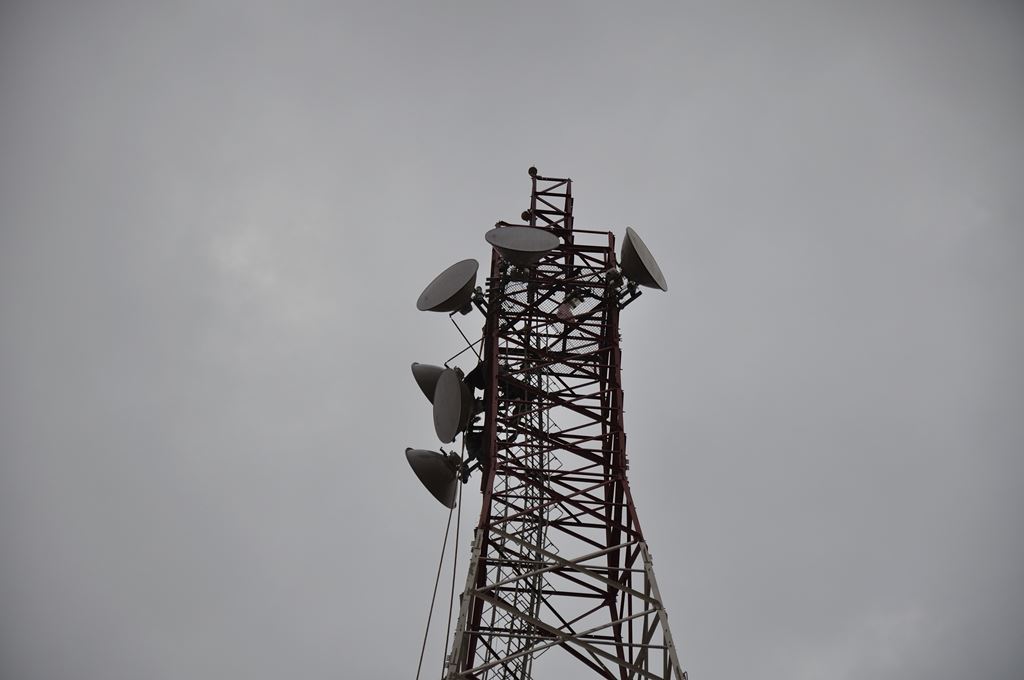
BTESA has provided microwave link networks in different frequencies and topologies all over the world.
As an interesting remark, BTESA installed some years ago what is considered to be the longest link on earth: 240km in a single hop! It was installed in Equatorial Guinea and linked the island (Malabo) with the continent (Bata). To achieve this single long jump, large diameter antennas, and space and frequency diversity were used.
The remaining capacity of the 155 Mbps microwave link network has been handed over to a telecommunication operator, so that the television can generate revenue.
The link network is conceived on IP technology, where any relevant equipment is identified by means of an IP address and connected to an Ethernet router. This solution allows an easy future expansion of the network, as new equipment can be easily included into the IP planning.
Once the TV programs are IP-encoded and inserted into the network, they are transported and distributed from station to station. The equipment is able to perform Intelligent Routing, detecting whether a certain path is reliable or not to transmit data to a certain final station, and if any problem is found, redirecting the data through alternative paths which will finally reach the desired station.
All hops have Bidirectional Performance, so data is not only flowing from a main point to the rest of the networks, but also any of the points of the network is capable of addressing contents to any other. Combined with intelligent routing, this provides flexibility to accept contribution at any of the broadcasting centers, not only for DTT programs or occasional events but also to any type of data that can be transported.
In order to reinforce these characteristics, the network could be deployed in such a way that several rings are formed. These rings reinforce the intelligent routing and end up resulting in a high reliable communications network.
Regarding one of the most important issues for a proper operation, that is, the energy supply, the microwave radiolink equipment could be supported by a green solution based on the use of a self-sufficient Solar Energy System, dimensioned with batteries enough to provide a minimum autonomy of four (04) days.


